One live event stream
Trackers, sensors, cameras, and phones normalise into the same pipeline, so a contractor's vehicle and your own behave identically on the map.
Solutions overview
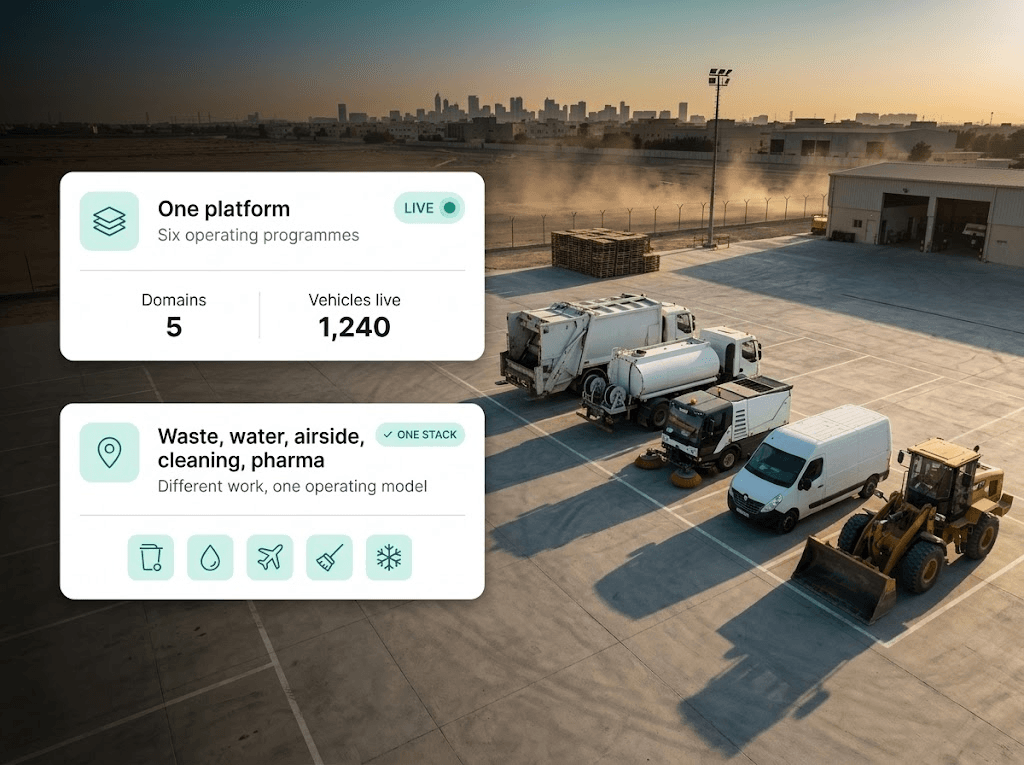
A product page tells you what a feature does. These pages describe the whole operating problem — the contracts, the contractors, the crews, the regulator — and the stack we assemble to run it. 6 implementations across 5 domains, all built on one platform.
01 · 1 implementation
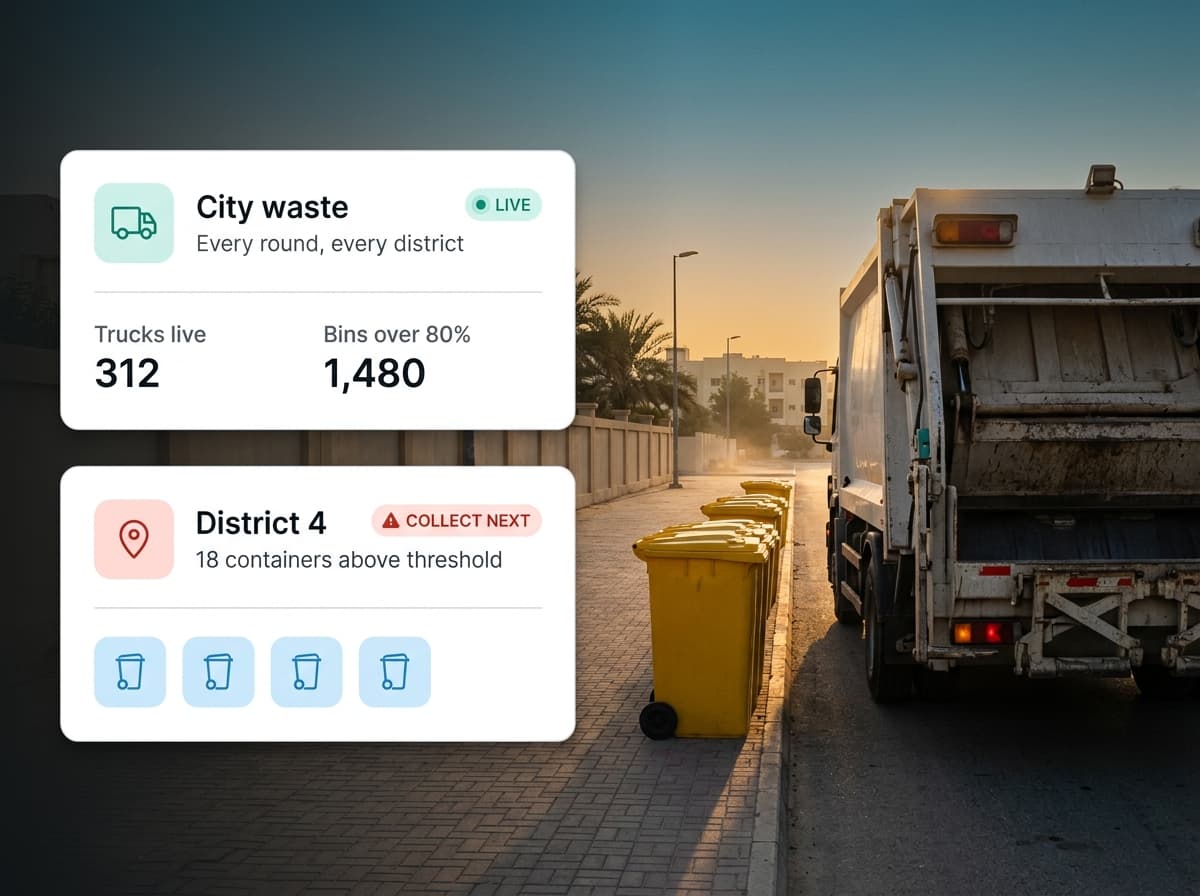
Collection programmes where bins, trucks, contractors, and facilities have to reconcile to one number.
02 · 2 implementations
Tankering and severe-weather response, where the queue changes by the hour and discharge has to be provable.
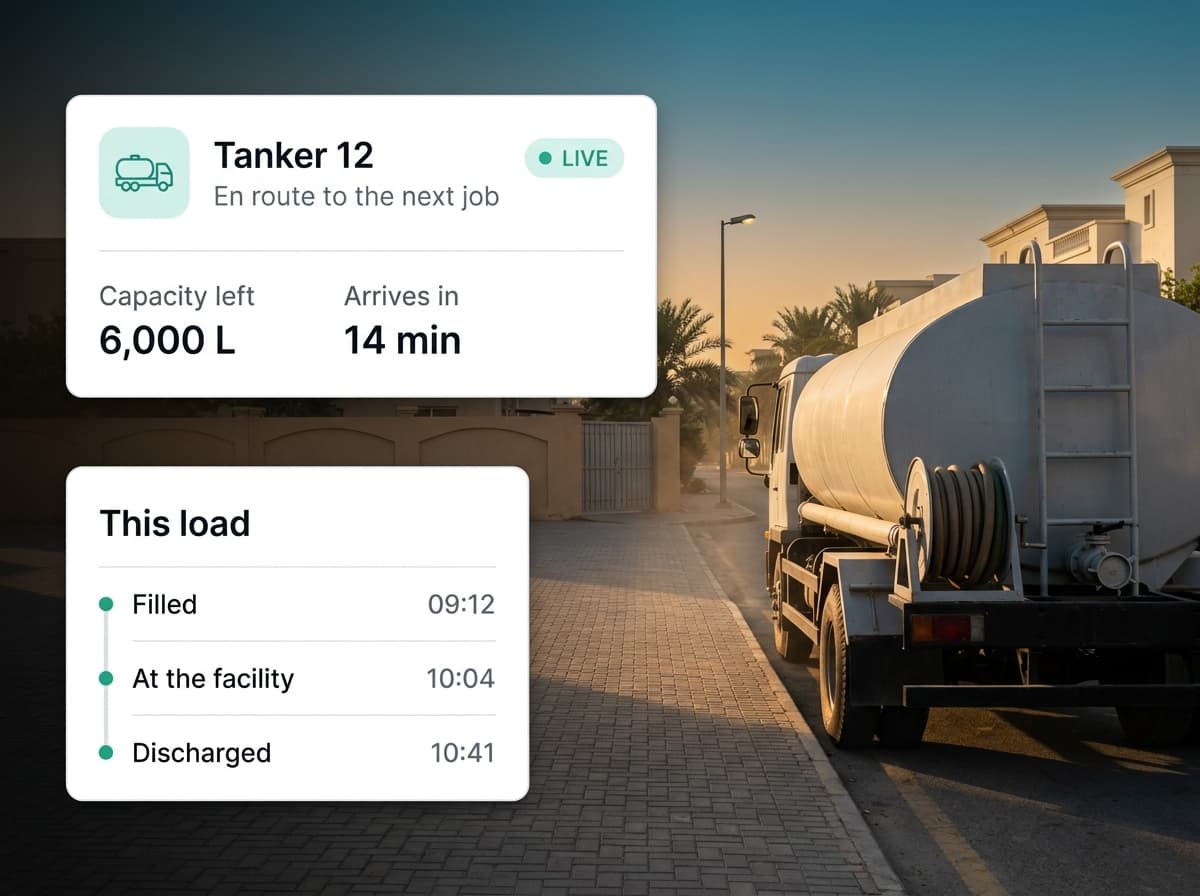
Assign by capacity, prove every discharge
Where there is no continuous sewerage network, tankering is the network. A late tanker floods a basement; a half-full one burns fuel that the next call needed. We give dispatch live position and live tank level, so the assignment fits the vehicle that can actually complete it.
See the implementation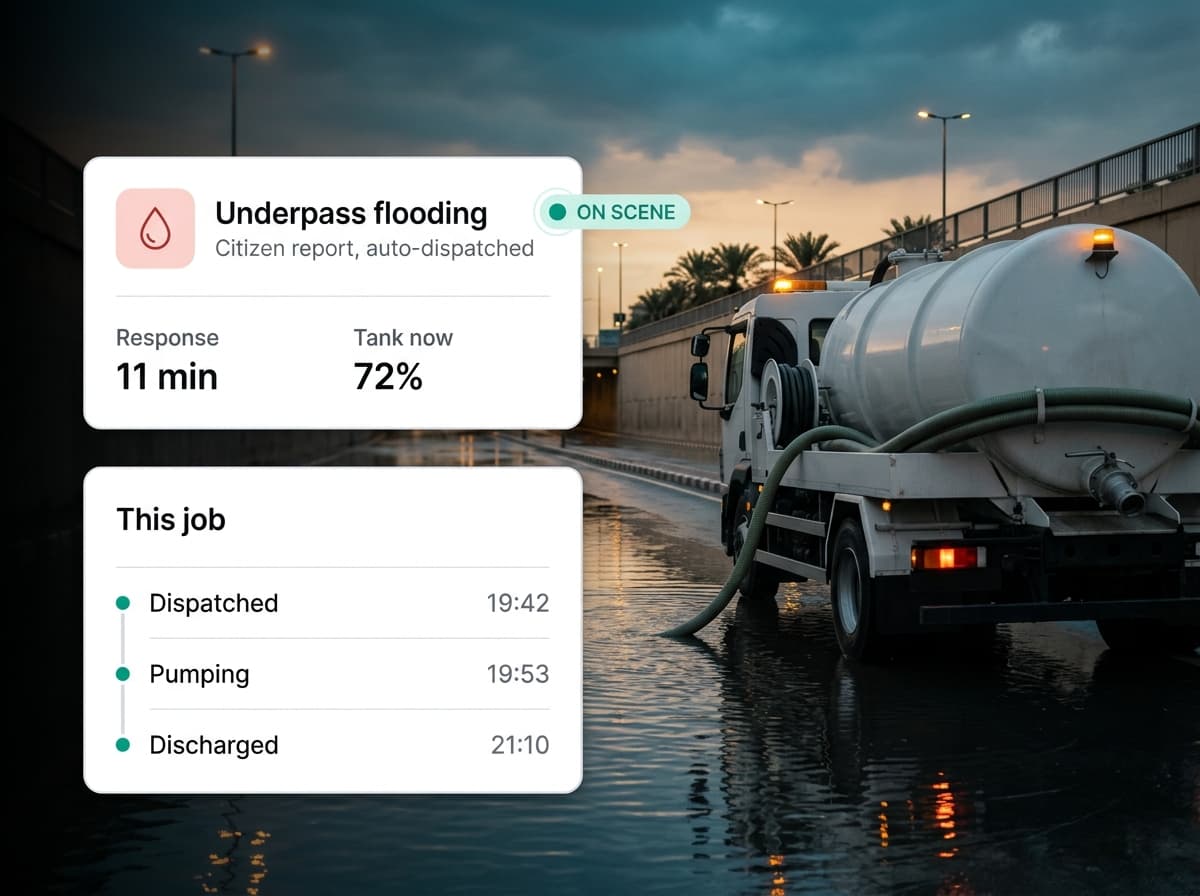
Citizen report to nearest pump
In a country built for dry weather, standing water becomes a public-safety hazard in minutes, and the authority usually does not own the trucks. We put contractor and subcontractor vehicles on one live picture and auto-dispatch the nearest available unit, then follow the load through: water pumped off the street, tank filling as the crew works, and the whole load emptied at an approved discharge station. All of it on infrastructure you host yourself.
See the implementation03 · 1 implementation
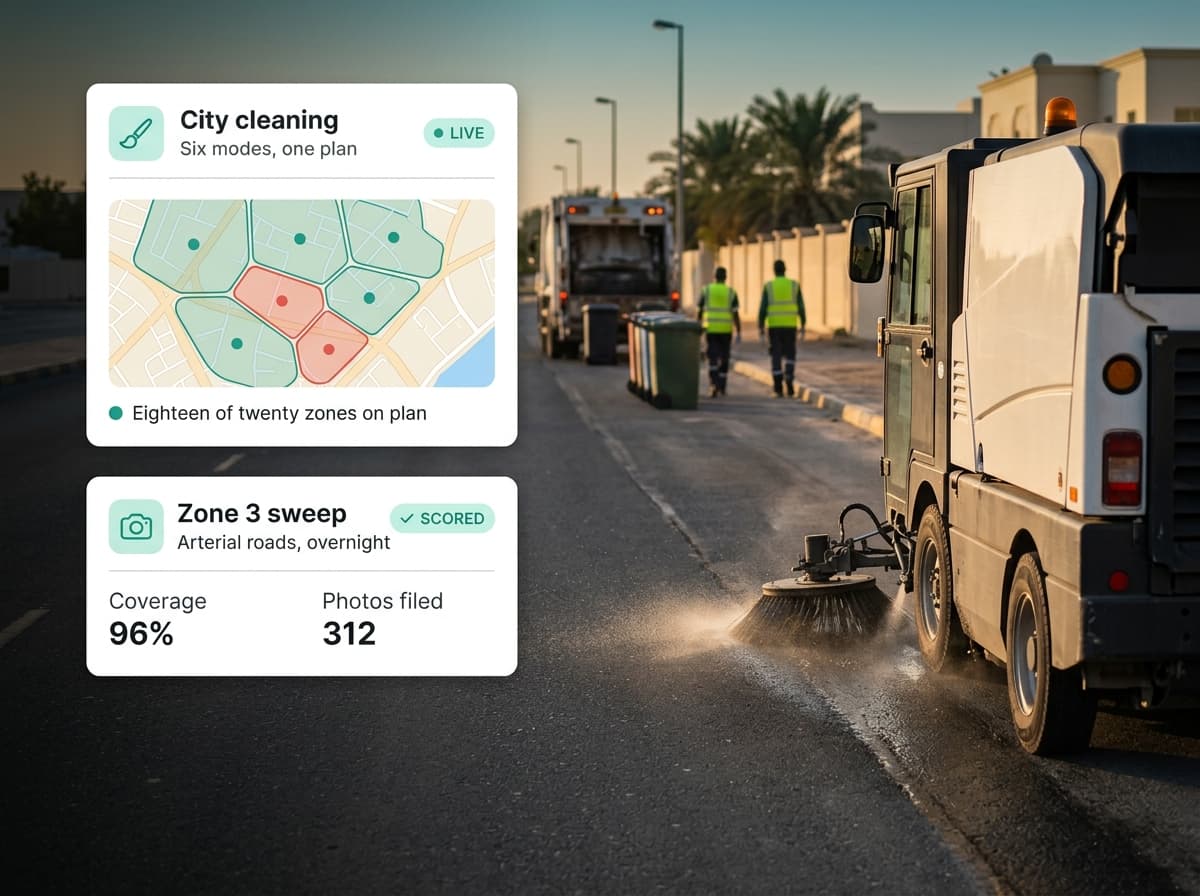
Regulators and municipal departments supervising fleets and crews they do not themselves employ.
04 · 1 implementation
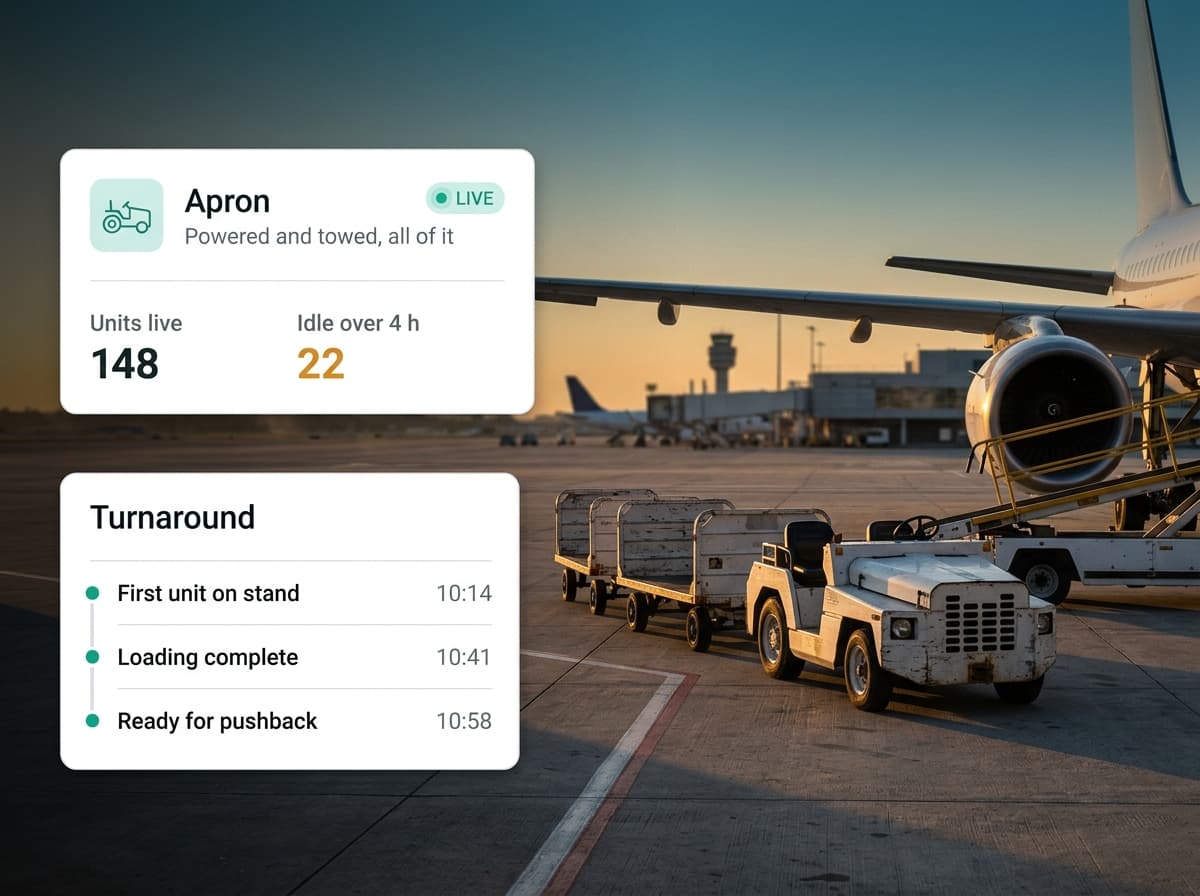
Ground handling on the apron, where half the fleet has no ignition and the clock is an airline's turnaround SLA.
05 · 1 implementation
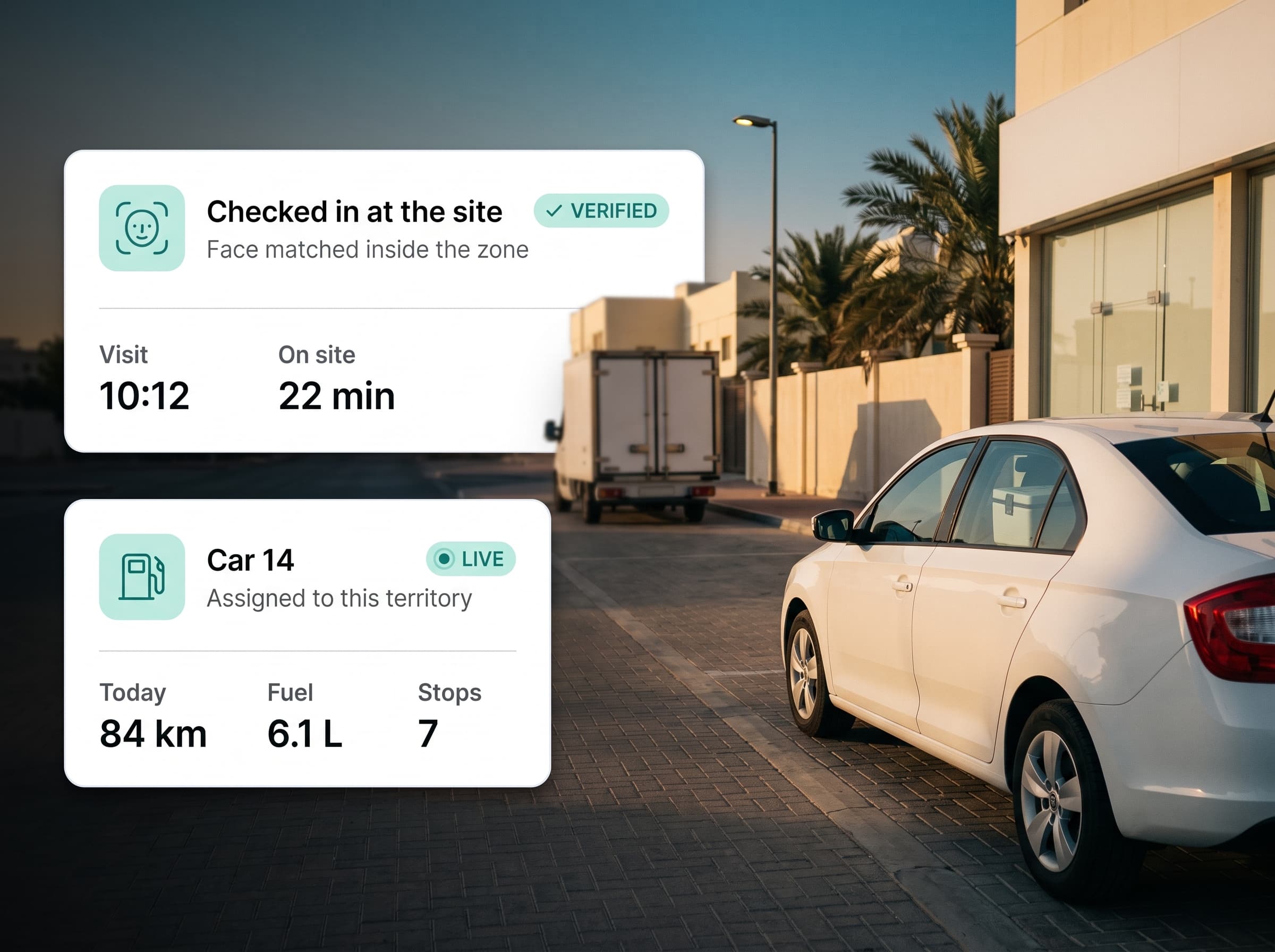
Regulated distribution and field teams, where custody of the load and presence of the person both have to hold up.
The common spine
Every page above describes a different operation. Underneath, they are the same four decisions — which is why a programme can grow a new sensor class or a new contractor without a second system appearing.
Trackers, sensors, cameras, and phones normalise into the same pipeline, so a contractor's vehicle and your own behave identically on the map.
Assets, zones, routes, crews, contracts, and organisations are related records — not separate systems with a nightly job between them.
Position traces, photographs, weights, and timestamps are captured against the thing they prove, which is what makes a score defensible.
Departments, contractors, and trading partners read one dataset through their own scope, so onboarding a party is an admin task.

Discuss your deployment
Sovereign-data-friendly. Enterprise multi-org architecture. Built to integrate with the devices, SIM providers, and back-office systems you already run.